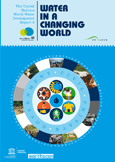
The triennial World Water Development Report (WWDR) is the United
Nations System flagship report on water, a comprehensive review of the state of the world’s freshwater resources. The Reports provide a mechanism for monitoring changes in freshwater resources and their management and tracking progress towards achieving targets, particularly those of the Millennium Development Goals and the
World Summit on Sustainable Development. The Reports also offer best practices and in-depth theoretical analyses to help stimulate ideas and actions for better stewardship in the water sector. Co-ordinated by the World Water Assessment Programme (WWAP), the development of the WWDR is a joint effort
of the 26 UN agencies and entities that make up UN-Water and is carried out in partnership with UN-Water Partners, governments, international organizations, non-governmental organizations and other stakeholders.
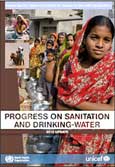
The World Health Organization (WHO)/United Nations Children's Fund (UNICEF) Joint Monitoring Programme on Water Supply and Sanitation
The WHO/UNICEF Joint Monitoring Programme on Water Supply and Sanitation (JMP) is the official mechanism of the UN System mandated to monitor global progress towards Millennium Development Goal (MDG) Target 7.C: "Halve, by 2015, the proportion of people without sustainable access to safe drinking water and basic
sanitation". Its objectives are to provide regular global reports on water and sanitation coverage to facilitate sector planning and management, to support countries in their efforts to improve their monitoring systems and to provide information for advocacy. JMP produces coverage reports biennially as well as reports on specific
aspects of drinking-water and sanitation. The reports utilize data principally from nationally-representative household surveys and censuses and provide an overview of populations using different forms of drinking-water and sanitation.
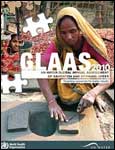
The Global Annual Assessment on Sanitation and Drinking-Water (GLAAS)
The Global Annual Assessment on Sanitation and Drinking-Water (GLAAS) reports on the capacity of countries to make progress towards the MDG water and sanitation target and on the effectiveness of external support agencies to facilitate this process. UN-Water GLAAS has been designed in response to the need to reduce the reporting burden and harmonize different reporting mechanisms of UN-family Member States. GLAAS also increases the comprehensiveness and accountability of information on the drinking-water and sanitation sectors. The UN-Water GLAAS initiative is technically coordinated by World Health Organization (WHO).