Uzbekistan - Celebrating Communities
From WaterWiki.net
| See the Video |
|---|
| (Source: http://www.youtube.com/watch?v=MyX4zTBlG2c) |
- Tapping tradition
In Uzbekistan, following tradition can help further modernity. A joint EU-UNDP project to provide water and sanitation services to rural inhabitants utilizes the time-old practice of hashar to foster a sense of local ownership and even save money.
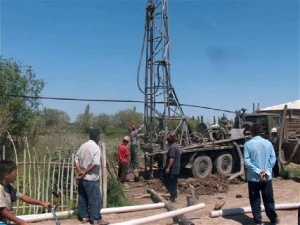
Hashar calls on members of a village to work voluntarily for the benefit of the whole community. The project, which aims to improve the water supply in the regions of Karakalpakstan and Namangan, has been successful at getting people to contribute their labour and equipment to the effort.
"The project makes people believe in their capacities to influence their own development", said Laura Rio of UNDP Uzbekistan. "It also shows concretely what people can do to support their country achieving the Millennium Development Goals (MDGs), one of which is about better access to water".
Although these regions have their own problems, improving access to safe drinking water is one of the highest priorities in both Karakalpakstan and Namangan, which have been hit by the political and economic changes since the collapse of the Soviet Union.
Outdated water infrastructure is now being replaced nationwide as part of a special government programme. The EU-UNDP project, which started in 2005 and will end this year, is doing its part to assist by providing local solutions.
Project workers first met with leaders of each community in Karakalpakstan and Namangan. Together they discussed the most pressing development issues, using the MDGs as a tool for dialogue. Water has been one of the issues that communities felt confident enough to address in cooperation with local authorities. Local residents decided for themselves what needs to be done to improve their access to quality water.
The EU and UNDP have provided funds to solve the problems identified by the communities. So far the project has benefited 18.2 percent of the population in the Namangan region and 7 percent in Karakalpakstan
The project has been a success in many villages. Before the project, members of the 3,000-person community of Urtakishlok in the Namangan region had to walk two kilometres to the nearest reservoir. Now they have access to clean water close by. The community contributed labour, cement, water taps and meals for workers, saving significant amounts of money.
Context | The EU-UNDP “Enhancement of Living Standards in Karakalpakstan and Namangan region” project. Celebrating Communities – community water projects |
Focus Areas | |
Geographic Scope | ; Uzbekistan
|
Stakeholders | The project is funded by the EU and implemented by UNDP. This project has promoted the visibility of EU as the main donor and contributed to improve the image of UNDP in Uzbekistan as a development broker. This project has consolidated UNDP reputation as an efficient implementing agency of EU programmes in the country.
|
Contacts | Anvar Nasritdinov, Head of Environment and Energy Unit, UNDP Uzbekistan
Laura Rio, Programme Coordinator, UNDP Uzbekistan Bakhadur Paluaniyazov, Project Manager, ELS in Karakalpakstan Ulugbek Dedabaev, Project Manager, ELS in Namangan region
|
|
Contents |
Background and Significance
.JPG)
People in Karakalpakstan and Namangan region, as in other regions have been affected by the challenges of social, economic and political transition. Although these regions have their own specific problems, they share common issues such outdated water infrastructures, ageing equipment for water filtration, financial complications and underdeveloped infrastructure in rural isolated areas. These problems affect the supply, access and quality of drinking water. Children, women and the low-income population are most vulnerable - children due to their growth processes, women due to their biological importance of reproduction, and the low-income population due to their inability to access quality health care.
Goal and Objectives
Improving and rationalizing access to safe drinking water is one of the highest priorities of communities in Karakalpakstan and Namangan. Improved water management systems are also key to people’s enhancement of living standards, especially in rural areas.
The Experience: Challenges and Solutions
WHAT
.JPG)
The project provides means and incentives to local authorities and communities to maintain and upgrade water infrastructures . The project operates mainly in rural areas where it mobilizes and pool local resources for the benefit of the whole community. By providing improved access to safe drinking water and sanitation, the project affects positively the everyday life of the population.
WHO
The team works together with communities and local authorities on the rehabilitation of social infrastructures.
WHERE
Republic of Karakalpakstan – Karauzyak, Kegeily and Shumanay districts Namangan region – Chartak, Kasansay and Mingbulak districts
WHEN
From the time period of 2005 – 2006
HOW
- How do the ELS project and communities determine needs for development?
First the ELS team meets with the respected people of community: aksakals, women-activists, or representatives of local authority, and brainstorm with them about the most pressing issues of that particular area using the MDGs as a starting point. Local residents think and decide for themselves what should be done to make the life of the community better.
Then the EU and UNDP in their turn estimate the funds that are needed to solve the problem. One of the unique concepts of the ELS project is that it engages the time honoured practice of hashar, an Uzbek tradition of people’s participation and inclusion in the community wellbeing, whereby members of one or more communities join hands and work voluntarily for the benefit of the whole community. Local people are usually limited in funds, as such they contribute their labour, equipment and skills. In such a way the ELS project joins hands with people and makes them believe in their capacities to influence their own development.
Results and Impact
The projects support and promote the involvement of people and local authorities in the development of their own communities. The projects mobilize 100 communities by using the Millennium Development Goals (MDGs) as a starting point to identify their main development concerns and how to overcome them. In particular, the projects work with local stakeholders to rehabilitate water and other infrastructures, improve access to safe drinking water and sanitation. The project operates mainly in rural areas where it mobilizes local resources for the benefit of the whole community.
Lessons for Replication
Main Results
- Things are going to change for the better for about 100 other communities in Karakalpakstan and Namangan region.
- With the EU and UNDP allocated funds and contributions made by local communities, there comes a hope for the many families in these two areas of Uzbekistan.
- The villagers of Makan-Kenes #4 in Karakalpakstan no longer walk a long way to bring water from neighboring pipes. Now about 2000 people of Makan-Kenes #4 have access to clean running water.
- The community of Urtakishlok in Namangan region didn’t have access to water in the community and people had to walk about 2 km to the nearest water reservoir. Now approximately about 3000 people have access to clean water.
- The Urtakishlok community has contributed labour, cement, water taps, and meal for workers.
- With the ELS project, funding from the EU, assistance from UNDP and local authorities things are going to change for the better in these small communities.
- The Enhancement of Living Standards in Fergana region project, which was launched on 1st May 2006 is based on the same methodology of the ELS projects in Karakalpakstan and Namangan region.
Outlook (Conclusions and Next Steps)
The contribution of authorities, international partners and people in Karakalpakstan and Namangan region in the successful implementation of the projects and contribution to improvement of living standards in the two regions will undoubtedly serve in future for similar projects and other initiatives.
Testimonies and Stakeholder Perceptions
Karakalpakstan and Namangan Regions-the road towards a better life
Timeframe & Status
The project has a duration of two years from 2005 – 2006
References
See also
External Resources
Enhancement of Living Standards Project
http://www.els.uz/res/Kk_Progress_Report_for_the_web_(March-October).doc?resourceId=9179
http://www.els.uz/res/Inception_Report_ELS-KKP-28-04-05.rar?resourceId=9311
http://www.els.uz/res/brochure_KKP.pdf?resourceId=10084
http://www.els.uz/res/KKP.rar?resourceId=12128
http://www.els.uz/res/Namangan_Report_(March-October).rar?resourceId=9475
http://www.els.uz/res/Inception_Report_ELS-NMG-28-04-05.rar?resourceId=9315
http://www.els.uz/res/Brochure_NMG.pdf?resourceId=10088
http://www.els.uz/res/NMG.rar?resourceId=12133
Interviewees and Key Contacts
Mr. Fikret Akcura, UNDP Resident Representative in Uzbekistan
Mr. Soeren Klem, Task Manager of EU/UNDP Enhancement of Living Standards in Karakalpakstan and Namangan project, European Commission
Mr. H. Abdurahmanov, Deputy Chairman of the Council of Ministers of the Republic of Karakalpakstan and Regional Project Coordinator of Enhancement of Living Standards in Karakalpakstan
Mr. Ilkhomidin Botirov, Deputy Khokim of the Namangan Region and Regional Project Coordinator of Enhancement of Living Standards in Namangan Region
Mr. Bekzod Teshebaev, Director, the EU Tacis Programme in Uzbekistan (UzBurokes)


